
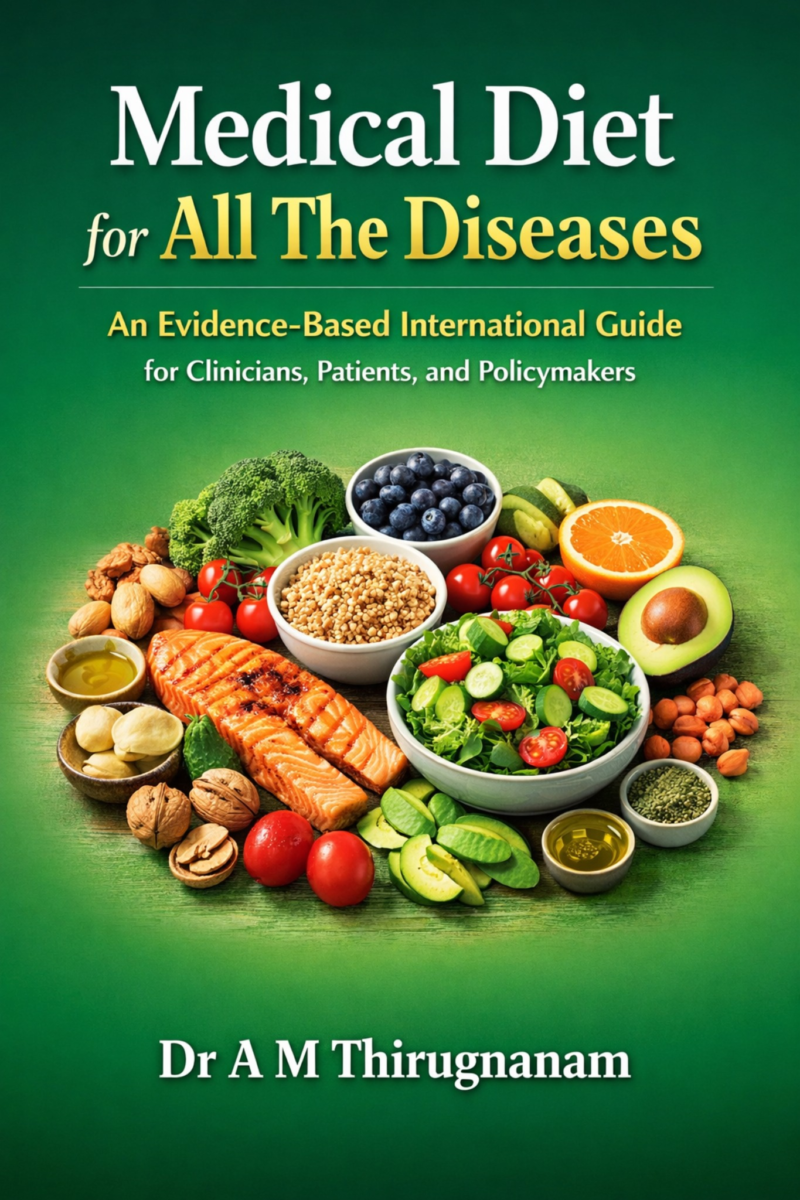
Medical Diet for All Diseases: An Evidence-Based International Guide for Clinicians, Patients, and Policymakers
Diet is one of the most powerful tools in the prevention, treatment, and long-term control of disease. Across the world, millions of patients suffer from conditions that are directly or indirectly influenced by food choices, nutritional patterns, body weight, metabolism, inflammation, immunity, and lifestyle. From diabetes, hypertension, heart disease, kidney disease, liver disease, obesity, cancer, gastrointestinal disorders, autoimmune conditions, pregnancy-related disorders, and neurological illness to critical care recovery, nutrition plays a central role in modern healthcare.
Medical Diet for All Diseases: An Evidence-Based International Guide for Clinicians, Patients, and Policymakers is written as a practical and comprehensive guide to help readers understand the connection between food, disease, prevention, and recovery. This book is designed for doctors, dietitians, nurses, medical students, public health professionals, patients, caregivers, hospital administrators, and policymakers who want a clear, clinically useful, and evidence-informed approach to therapeutic nutrition.
In everyday practice, diet advice is often simplified into general instructions such as “eat less salt,” “avoid sugar,” “reduce fat,” or “lose weight.” However, real patient care requires a more precise understanding. A person with heart failure needs careful fluid and sodium guidance. A patient with chronic kidney disease requires individualized protein, potassium, phosphorus, and salt planning. A diabetic patient needs carbohydrate quality, portion control, glycemic index awareness, and cardiovascular risk reduction. A cancer patient may require nutritional support to prevent muscle loss and treatment-related weakness. A pregnant woman, elderly patient, child, athlete, or critically ill patient may each require a different nutritional strategy.
This Kindle edition presents medical diet as an essential part of clinical decision-making. It explains disease-specific dietary principles in a practical manner, helping clinicians advise patients more confidently and helping patients understand why certain foods support recovery while others may worsen disease. The book emphasizes balanced nutrition, cultural adaptability, affordability, patient education, long-term adherence, and prevention of misinformation.
The book explores important topics such as heart-healthy diet, diabetic diet, renal diet, liver disease nutrition, obesity management, hypertension diet, anti-inflammatory diet, cancer nutrition, gut health, pregnancy nutrition, geriatric diet, pediatric nutrition, critical care nutrition, immune-supportive food patterns, micronutrient deficiencies, food safety, public health nutrition, and policy-level strategies for healthier communities.
In the modern world, dietary confusion is widespread. Social media trends, commercial diet programs, unsupported claims, and conflicting advice often mislead patients. This book encourages a scientific, practical, and patient-centered approach to nutrition—one that respects evidence, local food habits, medical conditions, economic realities, and individual needs.
Medical Diet for All Diseases is more than a diet book. It is a clinical and public health guide that connects the kitchen, clinic, hospital, community, and policy system. Written by Dr A M Thirugnanam, this book aims to empower clinicians with better counseling tools, guide patients toward safer food choices, and support policymakers in building nutrition-centered healthcare systems for healthier societies.
Related
Discover more from Dr AM Thirugnanam
Subscribe to get the latest posts sent to your email.


Reviews
There are no reviews yet.