
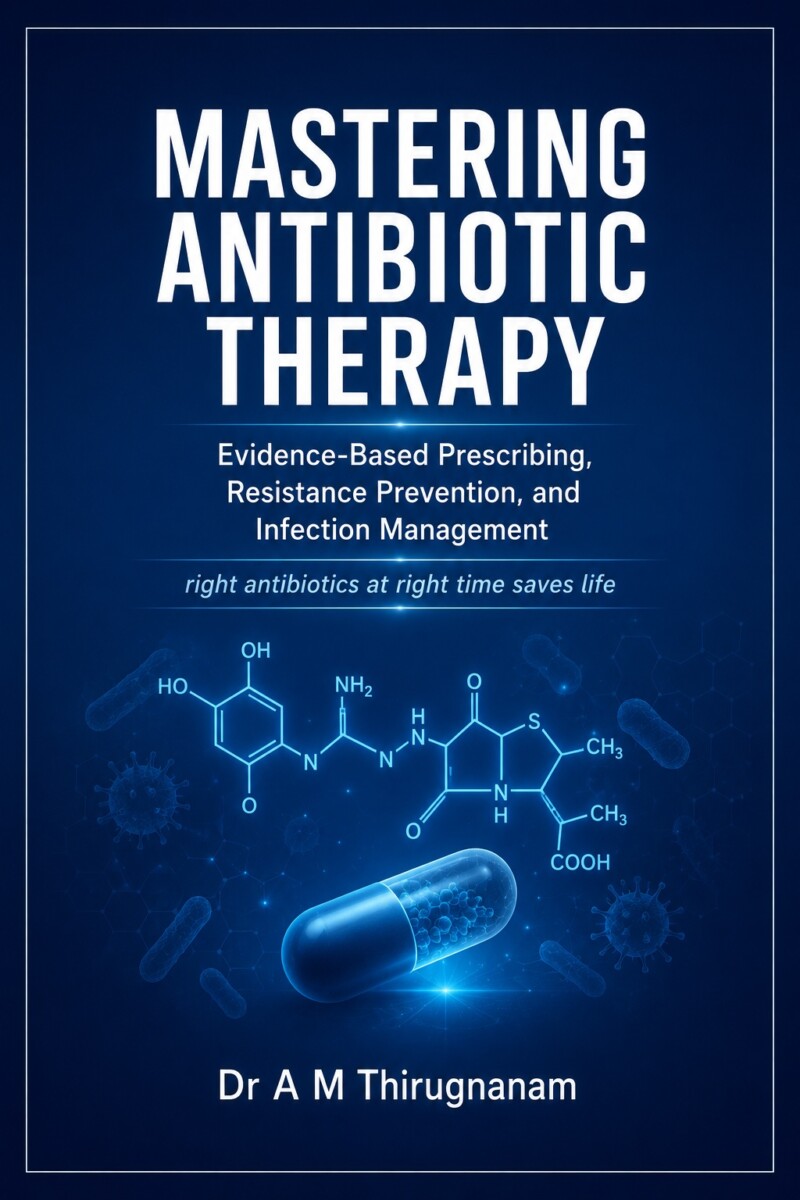
Mastering Antibiotic Therapy: Evidence-Based Prescribing, Resistance Prevention, and Infection Management is a practical, clinician-focused guide designed for one of the most important decisions in modern medicine: choosing the right antibiotic, for the right patient, at the right time.
Antibiotics have transformed human survival. They have made once-fatal infections treatable, protected patients during surgery, improved intensive care outcomes, and supported the progress of modern medicine. Yet the same powerful drugs can become dangerous when used without precision. Wrong selection, wrong dose, unnecessary duration, delayed escalation, failure to de-escalate, or ignoring local resistance patterns can lead to treatment failure, drug toxicity, prolonged hospitalization, antimicrobial resistance, and preventable mortality.
This book is written to bridge the gap between theory and bedside practice. It brings together the essential principles of antibiotic therapy, infection diagnosis, resistance prevention, and antimicrobial stewardship in a clear, structured, and clinically useful format. Whether the reader is a medical student, resident, practicing physician, intensivist, surgeon, pediatrician, emergency physician, nurse, pharmacist, microbiologist, or healthcare professional, this book provides a practical framework to understand antibiotics not merely as drug names, but as life-saving tools that require judgment, timing, and responsibility.
The central message of this book is simple and powerful: right antibiotics at right time saves life. In acute infection, every hour matters. In sepsis, pneumonia, meningitis, endocarditis, urinary tract infection, intra-abdominal infection, skin and soft tissue infection, and hospital-acquired infection, early recognition and appropriate therapy may determine the difference between recovery and deterioration. At the same time, unnecessary or excessive antibiotic use can harm the individual patient and society. This book therefore emphasizes both urgency and discipline—rapid initiation when indicated, careful microbiological evaluation, reassessment after culture reports, dose optimization, and timely narrowing or stopping of therapy.
Inside this book, readers will find an organized approach to antibiotic selection based on clinical syndrome, likely pathogen, Gram-positive and Gram-negative coverage, anaerobic coverage, atypical organisms, host risk factors, immune status, renal and hepatic function, allergy history, pregnancy considerations, hospital exposure, device-related infection, and local resistance trends. The book explains key antibiotic classes, their spectrum of activity, indications, limitations, adverse effects, drug interactions, and practical clinical pearls. It also highlights common prescribing mistakes and how to avoid them.
Special attention is given to antimicrobial resistance, one of the greatest challenges in healthcare. Resistant organisms such as MRSA, VRE, ESBL-producing Enterobacterales, carbapenem-resistant organisms, multidrug-resistant Pseudomonas, Acinetobacter, and drug-resistant tuberculosis require thoughtful, evidence-based strategies. This book introduces the reader to resistance mechanisms and shows why antibiotic stewardship is not just a hospital policy, but a moral and clinical duty.
This book also supports clinical decision-making in high-risk areas such as intensive care units, emergency departments, post-operative infections, diabetic foot infections, catheter-related infections, febrile neutropenia, infective endocarditis, central nervous system infections, and infections in elderly or immunocompromised patients. The aim is not to encourage blind protocol-based prescribing, but to develop intelligent, individualized, patient-centered antibiotic practice.
Written in a clear and accessible style, Mastering Antibiotic Therapy is designed to be both a learning text and a quick clinical reference. It is especially useful for readers who want to strengthen their confidence in infection management, improve prescribing accuracy, reduce avoidable complications, and understand the science behind rational antibiotic use.
In the era of rising resistance, modern clinicians need more than memorized drug lists. They need clinical reasoning, microbiological awareness, pharmacological understanding, and stewardship discipline. This book provides that foundation.
Mastering Antibiotic Therapy is more than a medical book. It is a practical guide to safer prescribing, better infection control, and responsible medical practice. For every clinician who treats infection, every student preparing for clinical medicine, and every healthcare professional committed to saving lives, this book delivers a timely and essential message: antibiotics are powerful—but they must be mastered.
Related
Discover more from Dr AM Thirugnanam
Subscribe to get the latest posts sent to your email.


Reviews
There are no reviews yet.