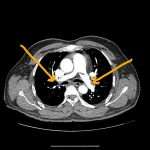
Takayasu arteritis commonly occurs in woman younger than age 50 years; however, it has been reported in patients as young as age 6 months ( Pediatric Takayasu Arteritis). Takayasu arteritis can manifest as isolated, atypical, and/or catastrophic disease. It can involve any or all of the major organ systems. The disease has been reported in all parts of the world, although it appears to be more prevalent in Asians. (See Epidemiology.)

Signs and symptoms

Approximately 10% of patients with Takayasu arteritis are asymptomatic. Clinical manifestations are heterogeneous and include the following:

  • Systemic (eg, malaise, arthralgias, fever) – May precede clinical vascular involvement
  • Cardiac and vascular (eg, bruit, especially carotid; blood pressure difference of extremities, claudication, hypertension)
  • Neurologic (eg, headache, visual disturbance)
  • Dermatologic (eg, erythema nodosum)

Diagnosis

The American College of Rheumatology classification for Takayasu arteritis requires the presence of 3 of the following 6 criteria:

  • Age of 40 years or younger at disease onset
  • Claudication of the extremities
  • Decreased pulsation of one or both brachial arteries
  • Difference of at least 10 mm Hg in systolic blood pressure between arms
  • Bruit over one or both subclavian arteries or the abdominal aorta
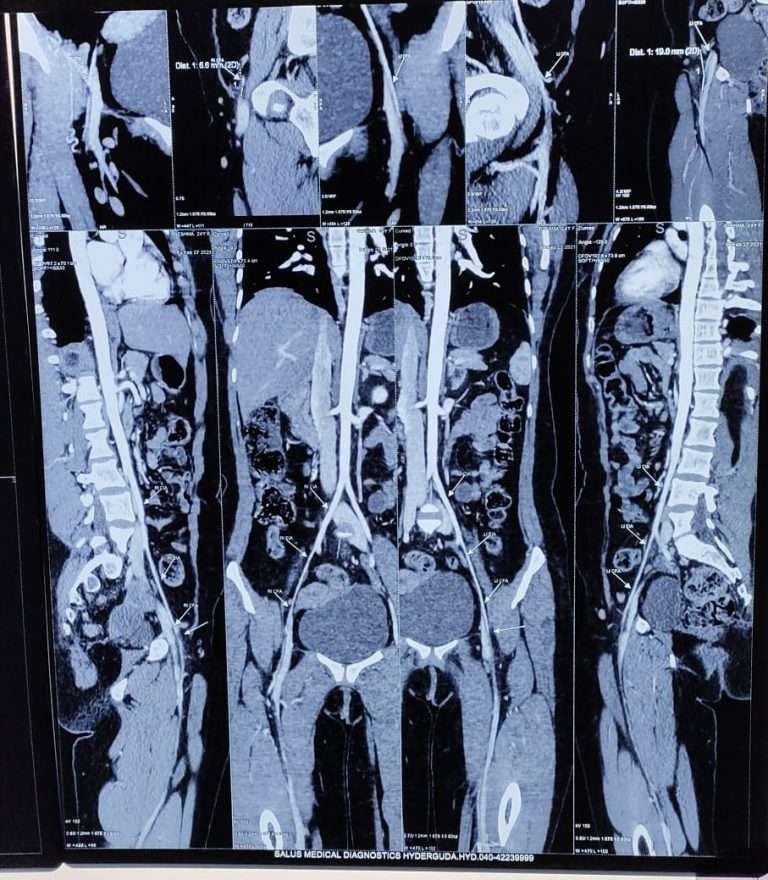
  • Arteriographic narrowing or occlusion of the entire aorta, its primary branches, or large arteries in the upper or lower extremities that is not due to arteriosclerosis, fibromuscular dysplasia, or other causes

Takayasu arteritis can be divided into the following six types based on angiographic involvement :

  • Type I – Branches of the aortic arch
  • Type IIa – Ascending aorta, aortic arch, and its branches
  • Type IIb – Type IIa region plus thoracic descending aorta
  • Type III – Thoracic descending aorta, abdominal aorta, renal arteries, or a combination
  • Type IV – Abdominal aorta, renal arteries, or both
  • Type V – Entire aorta and its branches

Treatment

Corticosteroids are the mainstay of therapy for active Takayasu arteritis. However, some patients may also require cytotoxic agents, to achieve remission and taper of long-term corticosteroid treatment. Biologic agents (eg, tocilizumab, tumor necrosis factor inhibitors) have shown encouraging results.

Dr AM Thirugnanam, cardiologist

Don’t miss this opportunity

We don’t spam! Read our privacy policy for more info.


Discover more from Dr AM Thirugnanam

Subscribe to get the latest posts sent to your email.

Dr AM Thirugnanam
Dr AM Thirugnanam
Articles: 22

8 Comments

  1. I’m often to blogging and i really respect your content. The article has actually peaks my interest. I am going to bookmark your web site and preserve checking for new information.

  2. Thanks for sharing excellent informations. Your website is very cool. I’m impressed by the details that you have on this web site. It reveals how nicely you perceive this subject. Bookmarked this website page, will come back for more articles. You, my pal, ROCK! I found just the information I already searched all over the place and simply could not come across. What a great web site.

  3. Thanks for sharing superb informations. Your site is so cool. I am impressed by the details that you¦ve on this website. It reveals how nicely you understand this subject. Bookmarked this website page, will come back for extra articles. You, my pal, ROCK! I found just the information I already searched all over the place and just could not come across. What a perfect website.

  4. Thanks for the sensible critique. Me and my neighbor were just preparing to do a little research about this. We got a grab a book from our local library but I think I learned more clear from this post. I am very glad to see such great info being shared freely out there.

  5. Wow that was odd. I just wrote an very long comment but after I clicked submit my comment didn’t appear. Grrrr… well I’m not writing all that over again. Anyway, just wanted to say great blog!

Comments are closed.