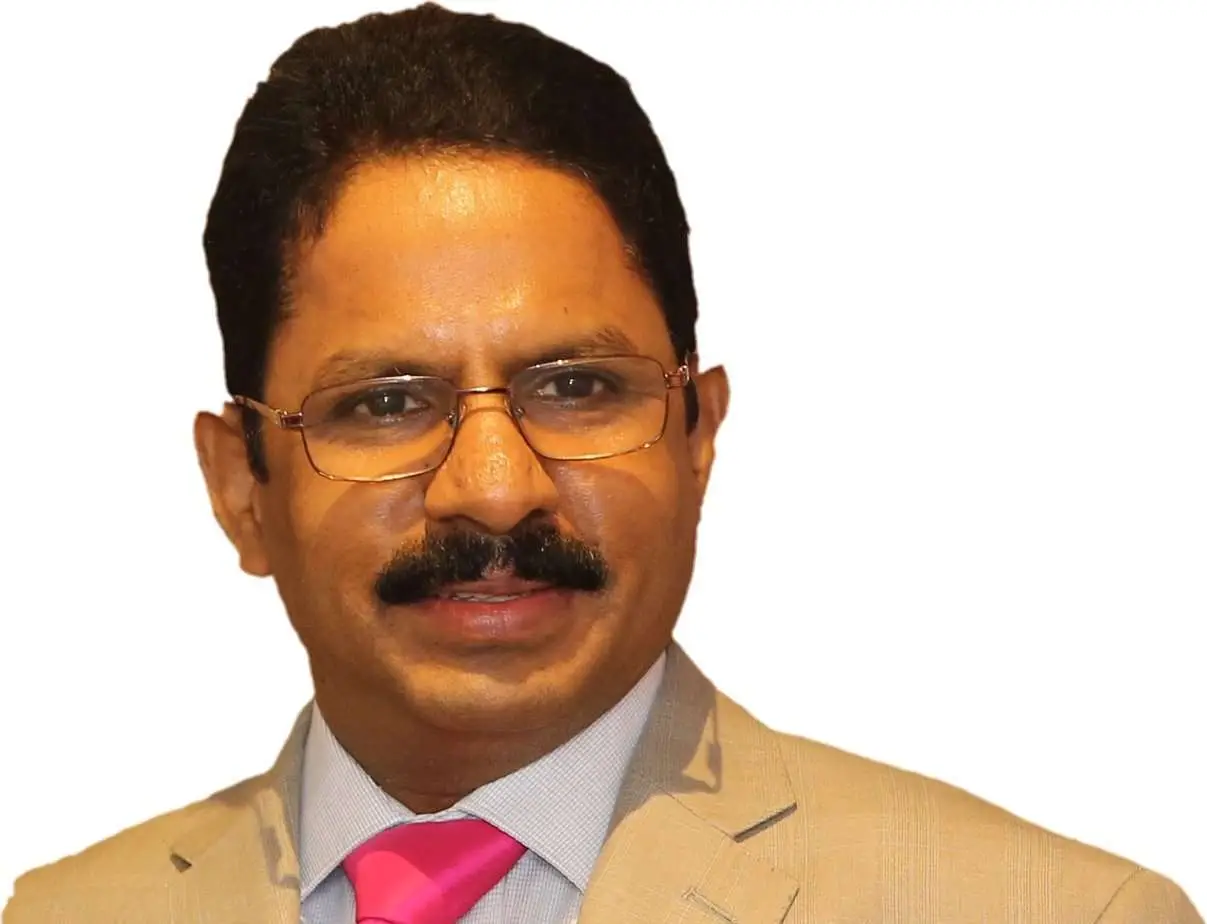

Dr A M Thirugnanam is a senior interventional cardiologist based in Hyderabad, India, known for complex coronary intervention — left main disease, chronic total occlusions and haemodynamically supported angioplasty — and for two procedures presented at international conferences as world-first techniques. He is also an educator, researcher and publisher of cardiology teaching material used by physicians and postgraduate trainees.
Who is Dr A M Thirugnanam?
Dr A M Thirugnanam is a Hyderabad-based interventional cardiologist whose practice sits at the difficult end of the specialty: the cases other operators decline. Left main coronary artery disease. Chronic total occlusions. Patients in cardiogenic shock. Patients whose kidneys, platelets or haemodynamics make a routine angioplasty anything but routine.
He has spent 25 years in interventional practice and has performed more than 45,000 cath lab procedures, including diagnostic angiography and intervention. He is affiliated with Virinchi Hospitals, Kamineni Hospitals and TX Hospitals in Hyderabad.
Alongside clinical work he founded the Academy of Elite Doctors, through which he teaches interventional and general cardiology to practising physicians, and he writes and publishes cardiology reference material and course content for doctors and students.
Credentials and qualifications
- MD — Doctor of Medicine
- FSCAI — Fellow of the Society for Cardiovascular Angiography and Interventions, conferred 2007
- MSICP — Member, Society of Interventional Cardiology Professionals
- 25 years in interventional practice; more than 45,000 cath lab procedures
- 18 case presentations and original studies at international meetings
- Founder, Academy of Elite Doctors
The FSCAI designation is worth a word of explanation, because patients rarely know what it signifies. The Society for Cardiovascular Angiography and Interventions confers fellowship on interventional cardiologists after review of case volume, complication rates, ethical standing and peer endorsement. It is a credential granted by other interventionalists, not purchased or applied for on merit of years served.
Landmark interventions
First left main coronary artery total occlusion angioplasty — TCT 2012, Miami
The left main coronary artery supplies the majority of the left ventricle. When it occludes totally, the conventional answer has been emergency surgery, because opening it percutaneously without circulatory support risks losing the patient on the table.
In 2012 Dr Thirugnanam performed a left main total occlusion angioplasty without a protection device. The case was selected for presentation at TCT 2012 — Transcatheter Cardiovascular Therapeutics, the largest interventional cardiology meeting in the world — held that year in Miami, Florida. It was subsequently covered in the Indian press, including the Deccan Chronicle of 13 November 2012.
The significance was not the individual save. It was that the case contributed to a shift in what interventionalists considered attemptable in the left main position.
First retrograde left common carotid angioplasty — CRT 2020, Washington DC
A 23-year-old woman presented with subtotal occlusion of the left common carotid artery secondary to Takayasu arteritis, a large-vessel vasculitis that predominantly affects young women and produces long, fibrotic, calcified stenoses that resist conventional antegrade access.
In 2019 Dr Thirugnanam approached the lesion retrogradely — crossing from the distal side — and successfully revascularised the vessel. The case was presented at CRT 2020 (Cardiovascular Research Technologies) in Washington DC as the first retrograde left common carotid angioplasty reported.
Complex procedures performed
Dr Thirugnanam’s interventional practice covers coronary, structural, peripheral and neurovascular territory:
Coronary
- Left main and bifurcation intervention
- Chronic total occlusion (CTO) angioplasty
- CHIP — complex, high-risk, indicated procedures
- Primary PCI in STEMI, including in renal failure, severe thrombocytopenia and active bleeding
- Calcified vessel preparation
- Intravascular ultrasound (IVUS) guided intervention
Structural heart
- TAVR — transcatheter aortic valve replacement
- TMVR — transcatheter mitral valve replacement
- TTVR — transcatheter tricuspid valve replacement
- TPVR — transcatheter pulmonary valve replacement
Peripheral and vascular
- Carotid and cerebrovascular intervention
- Below-the-knee (BTK) lesion intervention
- EVAR and TEVAR — endovascular and thoracic aortic repair
- Pulmonary and peripheral vascular intervention
Haemodynamic support
High-risk intervention in a failing heart requires mechanical circulatory support. Dr Thirugnanam performs supported angioplasty using Impella, ECMO and intra-aortic balloon pump (IABP), and implants permanent and temporary pacemakers.
Day-care angioplasty
Dr Thirugnanam has advocated day-care angioplasty in India — admitting, treating and discharging the suitable patient within a single day rather than keeping them in hospital for two or three nights.
The case for it is not primarily financial, though the cost reduction is real and substantial for Indian families paying out of pocket. It is that the hospital is not a benign environment. Nosocomial infection, deconditioning, sleep disruption and delirium all scale with length of stay. For a selected patient with a straightforward lesion, uncomplicated access-site haemostasis and a reliable person at home, the ward adds risk rather than removing it.
Patient selection is everything, and the approach is not appropriate for complex multivessel disease, acute presentations or patients who live far from emergency care.
Research and international presentations
Dr Thirugnanam has presented case material and original research at international cardiology meetings across more than a decade:
| Year | Meeting | Presentation |
|---|---|---|
| 2010 | International | High-risk PCI in an 88-year-old with pulmonary oedema |
| 2011 | International | Primary PCI in renal failure; complex LCX intervention; no-reflow refractory to all intracoronary agents |
| 2012 | TCT, Miami | Left main total occlusion angioplasty — selected as best interventional case |
| 2016 | CRT | Left main dissection in acute coronary syndrome |
| 2017 | CRT | Intra-procedural arrest following angiography in STEMI |
| 2018 | CRT | Left main lesion missed on angiography, detected by IVUS |
| 2018 | CRT | Ivabradine and eplerenone in HFrEF |
| 2018 | Cardiologists, Barcelona | Novel-generation everolimus vs sirolimus stents in CKD — 3-year follow-up, first such study in CKD patients |
| 2019 | Cardiologists, Rome | Cerebral protection during TAVR reduces acute and late stroke in aortic stenosis |
| 2019 | Cardiologists, Rome | IVUS detection of latent coronary lesions |
| 2020 | CRT, Washington DC | First retrograde left common carotid angioplasty in Takayasu arteritis |
A recurring theme runs through this body of work: the limits of the angiogram. Several presentations — the missed left main lesion, the latent lesion detection, the IVUS-guided cases — make the same argument from different directions, which is that lumenography under-reads disease and that intravascular imaging changes management more often than most operators assume.
Teaching, courses and publications
Through the Academy of Elite Doctors and his own publishing work, Dr Thirugnanam produces structured teaching material for doctors and postgraduate students:
- Basic cardiology — for physicians, postgraduates and general practitioners
- Echocardiography — from essentials through to advanced assessment
- Heart failure care — diagnosis, guideline-directed therapy, device selection
- Complex intervention — left main, bifurcation, CTO and calcified vessel strategy
- Multiple organ failure care — the cardiac patient with failing kidneys, liver or lungs
He also publishes cardiology books and maintains a digital medical library of case-based material, slides and video.
How to choose a cardiologist for complex heart disease in India
Patients and referring doctors searching for the “best cardiologist in India” are usually asking a more specific question than the phrase suggests. There is no single best cardiologist, in the same way there is no single best surgeon — there is a best match between a particular problem and a particular operator’s experience. Some criteria that genuinely discriminate:
1. Volume in your specific problem
An operator who performs 400 routine angioplasties a year is not necessarily the right choice for a calcified left main bifurcation. Ask how many of your specific lesion type the operator does annually. Numbers below roughly 25 per year in a complex subtype are worth questioning.
2. Willingness to say no
An interventionalist who has never referred a patient to surgery is a warning sign, not a recommendation. Complex coronary disease sometimes belongs to the surgeon, and a good operator will tell you so. Ask directly: would any cardiac surgeon disagree with this plan?
3. Access to haemodynamic support
For high-risk intervention, ask whether Impella, ECMO or IABP are available in the institution and whether the operator uses them routinely. Support that exists on paper but is never deployed is not support.
4. Use of intravascular imaging
IVUS and OCT change stent sizing and lesion assessment in a meaningful proportion of cases and are associated with better outcomes in complex PCI. An operator who never uses them in left main or long-lesion work is practising below current standards.
5. Teaching and peer scrutiny
Cardiologists who present their cases at international meetings — including their complications — submit their work to peer criticism. Those who teach have to justify their reasoning out loud. Both are proxies for a practice that is examined rather than merely busy.
6. What the second opinion says
For any proposed CABG, left main intervention, valve replacement or device implant, get a second opinion. A cardiologist confident in the plan will not resent it. One who discourages it has told you something important.
Consultation
Dr A M Thirugnanam offers outpatient cardiology consultation, diagnostic services, day-care angiography and angioplasty, and complex intervention.
TX Hospitals
2-7-71, Uppal Bharath Nagar, Near Masjid
Hyderabad, Telangana 500039
Telephone: +91 94413 58435
Also consulting at Virinchi Hospitals and Kamineni Hospitals, Hyderabad.
Book a consultation · Cardiology books · Digital medical library · Case library
Frequently asked questions
What is Dr A M Thirugnanam’s specialty?
Interventional cardiology, with a focus on complex coronary intervention — left main disease, chronic total occlusions, bifurcation lesions and high-risk angioplasty requiring mechanical circulatory support — alongside structural heart and peripheral vascular intervention.
What are his qualifications?
MD, FSCAI (2007), MSICP — Member, Society of Interventional Cardiology Professionals. He is a senior interventional cardiologist with 25 years in practice, affiliated with Virinchi, Kamineni and TX Hospitals in Hyderabad, and founder of the Academy of Elite Doctors.
What is left main coronary artery angioplasty?
The left main coronary artery is the short vessel supplying most of the left ventricle. Angioplasty here is technically demanding because any complication compromises a large territory of heart muscle simultaneously. It requires operator experience, intravascular imaging guidance, and often mechanical circulatory support.
What is Takayasu arteritis and why was the carotid case significant?
Takayasu arteritis is an inflammatory disease of large arteries, most often affecting young women, producing long fibrotic narrowings. The 2019 case was significant because the lesion was approached retrogradely — from the far side of the blockage — which had not previously been reported for the left common carotid artery.
Does Dr Thirugnanam teach or run courses?
Yes. Through the Academy of Elite Doctors he runs cardiology courses for physicians and postgraduate trainees covering basic cardiology, echocardiography, heart failure, complex intervention and multi-organ failure care, and he publishes cardiology books and digital teaching material.
Where does he practise?
Hyderabad, Telangana. He is affiliated with Virinchi Hospitals, Kamineni Hospitals and TX Hospitals, and consults at TX Hospitals, 2-7-71 Uppal Bharath Nagar, Hyderabad 500039.
Medical disclaimer: This page describes a cardiologist’s professional background and general information about cardiac procedures. It is not medical advice and does not establish a doctor–patient relationship. Treatment decisions must be made individually with a qualified cardiologist after clinical assessment. If you are experiencing chest pain, breathlessness or symptoms suggestive of a heart attack, seek emergency care immediately.
Written and medically reviewed by Dr A M Thirugnanam, MD, FSCAI, MSICP, Senior Interventional Cardiologist. Last reviewed: September 2026.
Discover more from Dr AM Thirugnanam
Subscribe to get the latest posts sent to your email.